Tuesday, November 1, 2016

Game of Featured Snippets: How to Rank in Position 0

Posted by larry.kim

Google's Featured Snippets are amazingly powerful. We're seeing more snippets than ever before for more search queries. You need them.


We know this thanks to some brilliant articles and presentations from some super smart people in the industry, including Glenn Gabe (see: The Power of Google Featured Snippets in 2016 and a Google Featured Snippet Case Study – also, an extra big shout out to Glenn for helping me answer some important questions I had when writing this article!), Peter Meyers (see: Ranking #0: SEO for Answers), and Rob Bucci (see: How to Earn More Featured Snippets).


But even after reading everything I could find about Featured Snippets, one huge question remained unanswered: How the heck do you get these damn things?


:you know nothing about featured snippets meme.jpg


All of this leads us to today's experiment: How exactly does Google's algorithm pick which snippet to feature?


Obviously, Google isn't manually picking them. It's an algorithm.


So what makes Google's Featured Snippet algorithm tick?


For example, if two competing domains both have great, snipp-able results, how does Google decide to pick one over the other? Take this one, for example:


:what is link building.jpg


Why does WordStream (in Position 4) get the Featured Snippet instead of Moz (Positions 1 and 2) or Search Engine Watch (Position 3) on a search for [what is link building]?


What we know about Featured Snippets


Before we dive into the unknown, let's briefly review what we know.


:knowledge is power.jpg


We know snippets, like unicorns, come in all shapes and sizes. Your content must provide the answer in the "right" format, which will vary depending on the specifications in Google's algorithm. Snippets can be:


  • Text.

  • Lists (ordered or unordered).

  • Images.

  • Charts.

  • Tables.

  • Knowledge Graph.


We also know that any website can earn a Featured Snippet. Large brands and sites have no advantage over smaller brands and sites.


Finally, we also know that winning a Featured Snippet lets you enjoy some spoils of war, including:


  • You get more website traffic.

  • You gain greater visibility in Google's SERPs.

  • You earn trust/credibility.


So that's what you need to know about Featured Snippets. Now let's dive into the unknown.


Important disclaimers


Featured Snippets pose a few problems that really complicated the analysis.


For one, snippets are finicky. You can do a search right now and see the snippet. But sometimes you can conduct the same exact search an hour later and the snippet won't be there.


For another, we're all working with limited data sets. We're limited to analyzing just the snippets we have.


Finally, snippets impact your organic CTRs. Some snippets will increase the CTR to your site – for instance, if you're ranked in fourth position but you have the featured snippet. But other times a snippet can actually decrease your CTR because the searcher already got their answer – no need to click through.


Google isn't much help either. Gabe asked Google SEO PR spokesperson Gary Illyes and got this frustratingly funny reply:


Theory #1: Snippets aren't featured based on organic search ranking factors alone


This one is relatively easy to prove.


According to Gabe's data, ranking position played some sort of role in whether you get Featured Snippets. Every single snippet was taken from a page that was good enough to rank in the top 10 organic positions.


If you look at Bucci's data, however, he discovered that Google will take snippets from content that ranks on Page 2 of Google.


I found something a bit more incredible when I pulled a report of snippets – 981 in total – for my own website. Take a look:


  • About 70 percent of the time, Google pulled snippets from pages in positions 1 to 3.

  • About 30 percent of the time, the snippets “source” comes from positions 4 to as deep as 71 (wow!).


If Google's algorithm were relying just on traditional search ranking factors (e.g., keywords and links), then Google would simply pick the first “snipp-able” content fragment from the highest-ranking piece of content every time. Google would never have to go to Page 2 or further (Page 8!) for snippets when other there are other perfectly nice formatted snippets to choose from which rank higher.


Clearly, this isn't happening. Something else is at play. But what?


Theory #2: Having your content in a snipp-able format matters (but isn't the whole picture)


Is it all about being the most clear, concise, and thorough answer? We know Google is looking for something "snipp-able."


For the best shot at getting a Featured Snippet, your content should be between 40 and 50 words, according to SEMRush's analysis.


Without a doubt, format matters to Google's algorithm. Your content needs to have the right format if you're ever going to be eligible to be snipped.


But again, we're back to the same question. How does Google pick between different pages with eligible stuff to snip?


Theory #3: Engagement metrics seem to play a role in snippet selection


To figure out what was happening, I looked at the outliers. (Usually, the best way to crack an algorithm is to look at the unusual edge cases.)


Let's look at one example: [how to get more Bing Rewards Points].


This page shows up as a snippet for all sorts of queries related to “getting bing rewards points,” yet the source of the snip is from position 10. What's crazy is that our page ranks behind Bing's official site and all sorts of other video tutorials and community forums discussing the topic.


Why the heck is this happening?


Well, when I look at this page in Search Console, I notice it gets an unusually high CTR of 21.43 percent, despite a ridiculously low average position of 10.


This CTR is 10x higher than what you'd expect to see at this position.


The other thing I noticed was that the page had remarkably great engagement metrics. The time on site (which is proportional to dwell time) was an amazing 14 minutes and 30 seconds.


C:\Users\lkim\AppData\Local\Temp\SNAGHTML83e215.PNG


This time on site is considerably higher than the site average – by nearly 3x!


Note: This is just one simple example. I did this for more than 50 pages (unfortunately I was limited by data here because I was looking specifically for pages that rank poorly, yet generate snippets).


What I found was that the relative time on site for pages that were snipped from low positions on the SERP has incredibly higher time on page, compared to the site average.


:time on site low position snippets.png


Basically, what I think might be going on is something like this:


:how-featured-snippets-get-picked.png


Supporting fact #1: Marissa Mayer said it worked this way


In addition to this data, there are a couple more reasons why I think engagement metrics may be playing a key role in Google's Featured Snippet algorithm. These examples indicate that Google has long-held beliefs around good engagement metrics reflecting quality content.


Does the past hold some important secrets to our current plot? Let's see.


:watch listen remember.jpg


First, we'll head back to 2007 for an interview with Marissa Mayer discussing the OneBox and how features like news, maps, and products would get promoted above the organic results into the OneBox, based on click-through rate:


"We hold them to a very high click-through rate expectation and if they don't meet that click-through rate, the OneBox gets turned off on that particular query. We have an automated system that looks at click-through rates per OneBox presentation per query. So it might be that news is performing really well on Bush today but it's not performing very well on another term, it ultimately gets turned off due to lack of click-through rates. We are authorizing it in a way that's scalable and does a pretty good job enforcing relevance."

Supporting fact #2: Google used the same algo in paid search a few years back


OK, now let's go back to 2008 – back when Google still had AdWords ads on the right rail. (Unfortunately, with the death of the right-side ad rail, all ads appear above the organic search results now – a moment of silence for the right-side rail).


Google would promote three ads to appear above the organic search results. How did Google decide which paid search ads to feature above the organic search results?


Here's what Google revealed in an AdWords blog post, "Improvements to Ads Quality":


"To appear above the search results, ads must meet a certain quality threshold. In the past, if the ad with the highest Ad Rank did not meet the quality threshold, we may not have shown any ads above the search results. With this update, we'll allow an ad that meets the quality threshold to appear above the search results even if it has to jump over other ads to do so. For instance, suppose the ad in position 1 on the right side of the page doesn't have a high enough Quality Score to appear above the search results, but the ad in position 2 does. It's now possible for the number 2 ad to jump over the number 1 ad and appear above the search results. This change ensures that quality plays an even more important role in determining the ads that show in those prominent positions."

What's important to know here is how incredibly important CTR is in the Quality Score formula. By far, CTR has the biggest impact on Quality Score.


So here we have spokespeople from both the organic search side and Google's own ad system telling us that CTR can play a vital role in helping Google ensure that a piece of content or an ad meets a high enough quality threshold to qualify to appear in the very prominent and valuable space above the organic search results.


That's why I strongly believe that Featured Snippets work very much the same way – with CTR and engagement metrics being the key element.


What does it all mean?


:game of snippets.jpg


Featured Snippets give us yet another reason to focus on engagement rates. This year we talked about how engagement rates:


Any one of these alone is good reason to focus on improving your CTR. But wait, there's more: I believe engagement rates also impact the selection of Featured Snippets.


So in addition to formatting your on-page copy to meet the snipping requirement, follow the guides on improving CTR and time on site.


A call to arms


:more featured snippets data.jpg


One thing that's hard about doing research and analysis on Featured Snippets is that we're limited to the data we have. You need to have lots of snippets and access to all the CTR data (only the individual webmasters have this). You can't just crawl a site to discover their engagement metrics.


Why don't we team up here and try to crack this nut together?


Have you won Featured Snippets? What are your engagement rates like for your featured snippets – from the Search Console for CTR and Google Analytics for time on site? Do you see any patterns? Please share your insights with us in the comments!


Sign up for The Moz Top 10, a semimonthly mailer updating you on the top ten hottest pieces of SEO news, tips, and rad links uncovered by the Moz team. Think of it as your exclusive digest of stuff you don't have time to hunt down but want to read!

We're travelling to Italy to attend SMXL Milan; November 7th – 9th

Next week, the Majestic team will be heading over to Italy to attend and sponsor SMXL Milan which will be held in the grand MiCo Milano Congressi, the largest convention centre in Europe. Taking place on the 7th – 9th November, this 3 day conference will bring together a mixture of SEOs, social media managers,…


The post We're travelling to Italy to attend SMXL Milan; November 7th – 9th appeared first on Majestic Blog.

Bing Reveals Top Searches After Each Presidential Debate by @MattGSouthern

What are the most asked questions after the conclusion of a presidential debate? Bing took a unique approach to finding out the answer.

The post Bing Reveals Top Searches After Each Presidential Debate by @MattGSouthern appeared first on Search Engine Journal.

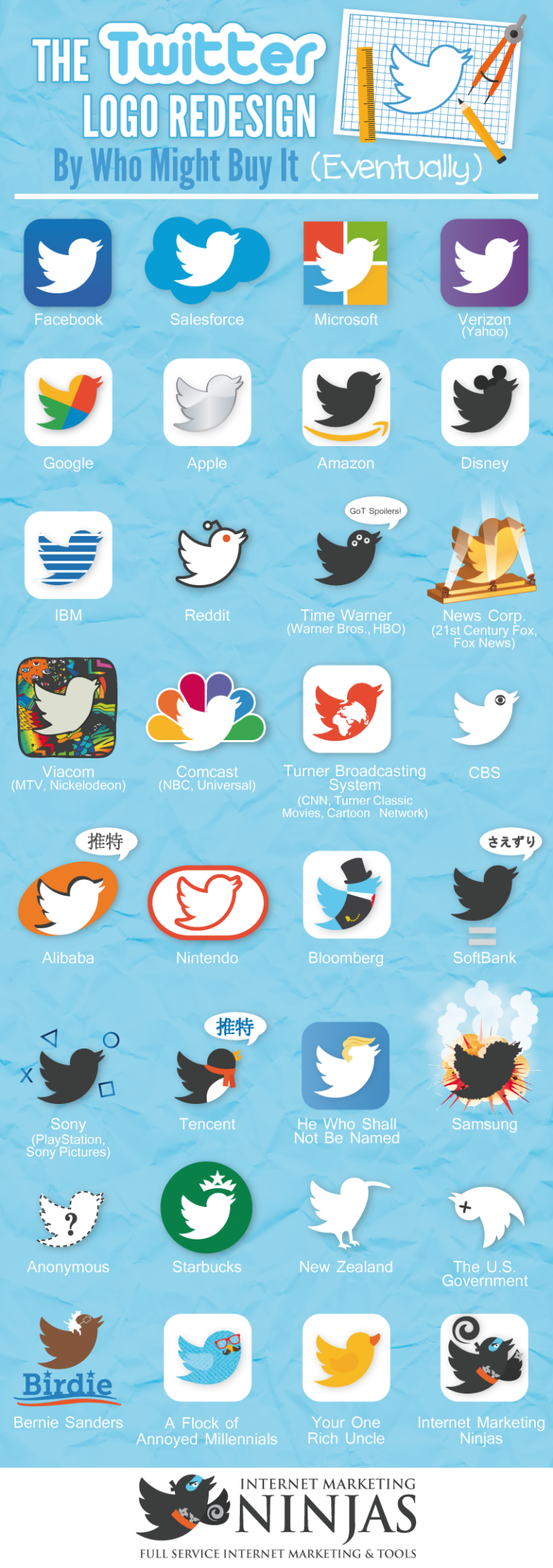
The Twitter Logo Redesign By Who Might Buy It (Eventually)

It's no secret that Twitter has been having difficulty trying to sell itself. Once Salesforce opted out of making a bid on the social media platform in early October, its future started to become uncertain. Companies once rumored to be interested, such as Google, Facebook, and even Disney, have all since revealed that they have no plans to place a bid.


While Twitter continues its desperate search, we decided to help them out by redesigning their logo based on who might eventually buy it.


The Twitter Logo Redesign By Who Might Buy It (Eventually)


Embed it:


The above infographic was proudly researched and designed by the Digital Asset Team at Internet Marketing Ninjas. Our team offers an impressive selection of digital assets including infographics, quizzes, in-depth blog posts, applications, and widgets that are developed with your goals as a company in mind and are geared toward your ideal potential customers.


We offer a full month of dedicated digital asset promotion, during which our team works to achieve virality, link acquisition, increased traffic, social media sharing, and brand recognition.


The post The Twitter Logo Redesign By Who Might Buy It (Eventually) appeared first on Internet Marketing Ninjas Blog.


How to get started with online reputation management

Online reputation is important for every business and social media has only escalated the need. But how can you filter the noise to maintain a positive reputation?


As social media usage increases and people feel more comfortable expressing their opinions through all the platforms, online reputation management becomes even more crucial for every business trying to promote its services.


It is estimated that consumers are 92% more likely to trust their peers over a brand when considering a new purchase, which means that online reputation may bring a customer closer to your business.


Online reputation management is the process a business follows to analyse and monitor all its relevant mentions and reviews that take place on the web. It is helpful to keep track of the sentiment around your business, as this may offer useful insights on how to improve your digital strategy.


For example, it may be useful to establish a positive online presence, as 86% of people hesitate to purchase a product from a business with negative reviews. Would you risk losing potential customers over your online reputation?


screen-shot-2016-10-22-at-14-18-59


Image: TalkWalker


Here are five basic steps to consider when starting with online reputation management.


1. Assess your current reputation


Start by analysing the existing online reputation for your business. What are the first results in search engines? What are people saying in social media and blogs?


This is the stage to collect all the information that will offer you a better understanding of how others view your business.


It's not just about performing a search, it may also extend to the analysis of previous campaigns, hashtags, existing content, social handles, and anything that exists on the web and is relevant to your business.


Are all the details correct? Do the employees support your online reputation? Are there are any changes that need to be highlighted to your online presence?


screen-shot-2016-10-22-at-13-41-12


Image: TalkWalker


2. Identify changes needed


It's useful to create a positive reputation before you come across a negative issue. If the business already has an online presence, it may be a good idea to filter out the noise and examine the first changes you need to make.


For example, how about “hiding” all the mentions that are not relevant or useful enough to be linked to your business? Is there a recurring mention that you'd like to remove?


Moreover, you can even set personalised filters to help you highlight the most relevant results for your business.


Social listening tools may take you to the next step of this process, by offering you valuable insights on your brand's reputation and how this can be improved.


3. Determine what works best


Once the monitoring and the research is complete, it's time to decide on the best sources to include in your online reputation strategy. Which platforms work better for an improved online reputation for your business?


Do you need to create more content? Should you switch the existing focus of your marketing efforts to enhance your online reputation? This is another step that you listen and learn until you're able to understand the most effective ways that could impact the management of your online reputation.


 You may start with an initial decision on the platforms to focus on and if you still feel that you're not targeting the right audience, you can always experiment with different areas of interest.


Social media, online press, blogs, and forums indicate the endless opportunities you may test until you find the perfect way to craft the strategy for your online reputation.


screen-shot-2016-10-22-at-13-40-41


Image: TalkWalker


4. Create a reputation strategy


Your online reputation strategy should include the content, the platforms, the opportunities for expanded reach, but also all the ways you can involve the community in the enhancement of your online presence.


Fresh content can help you update your SERPs, which may push down any negative content, or simply allow you to promote the latest content you're creating about your business. This is always useful when trying to prove that your business has a consistent and valuable online presence.


Moreover, it's important to claim and update local listings, or involve Yelp and Google Business to ensure that your business is properly represented, offering updated information in every platform.


Your customers can serve as the best promotion for your online reputation and it's always a good idea to ask them for reviews and testimonials. There needs to be the right timing to ask for them and a reward may also encourage them to spend time on them. How about creating a campaign to encourage new reviews?


Once you have the reviews, feel free to share them and include them in your content marketing strategy, showing that you value your customers and you highlight their genuine and (hopefully) positive reviews.


In case of a negative review, you should never delete it, as it proves that you are not afraid of everyone's opinion, but on the contrary, you are listening to all your customers and you're ready to improve the customer experience.


screen-shot-2016-10-22-at-14-42-00


5. Start building


There should be a constant process in the creation and the management of your online reputation, from new content, to updated information to the listing sites and the encouragement of new reviews.


Once you're active in monitoring your brand's presence, you're already prepared to deal with any new situation that may need your attention. It's always helpful being proactive and brand listening, even with an automated process that may notify you for new mentions, can facilitate this process.


You can also blend online reputation management with customer service, competitor analysis and crisis management, to create a complete strategy on how to deal with any event. This will help you have a great overview on anything that involves your brand's online presence, offering the right insights on how you can improve your relationship with your customers.


screen-shot-2016-10-22-at-14-36-13


Image: TalkWalker

Monday, October 31, 2016

How to Use HREFLang Correctly: An Interview with Bill Hunt

In this Pubcon interview Bill Hunt, President of Back Azimuth Consulting. sat down with Kelsey Jones, SEJ's Executive Editor, to talk about HREFLang, what it means for international SEO, and discuss some of the pitfalls SEOs face.

The post How to Use HREFLang Correctly: An Interview with Bill Hunt appeared first on Search Engine Journal.

Is Amazon the go-to search engine this holiday season?

Almost everyone knows that the overwhelming majority (93%) of online experiences begin with a search engine, but when you're looking to finish off your holiday shopping list, what search engine do you go to? Amazon or Google?


In 2012, a Forrester report found that 30% of all online shoppers start research products at Amazon. Wordtracker even went so far as to say that “Amazon has not only topped Google as the number one shopping search engine, but has attracted droves of individual and corporate sellers to its marketplace.”


Apparently, not much has changed since that time.


A recent study at the start of peak season for ecommerce has revealed that online retailer Amazon has taken a huge lead and become the first place consumers go to find products.


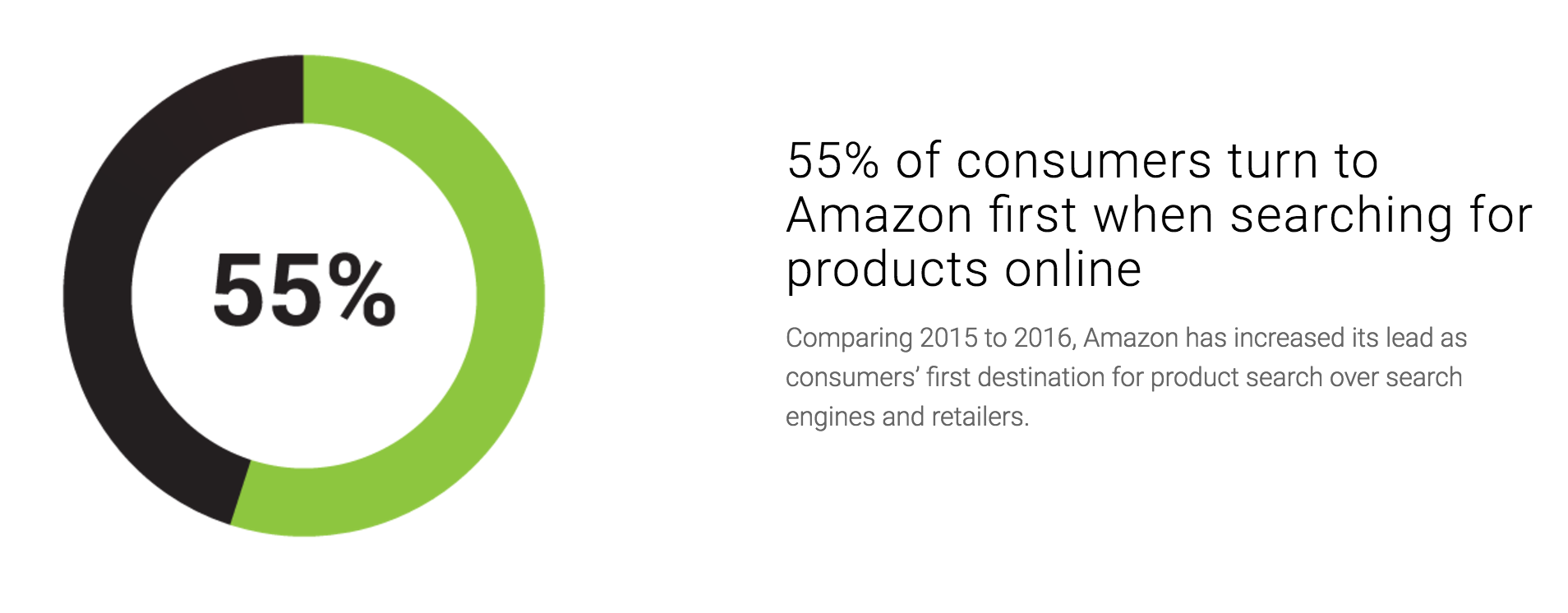
The study, run by personalization platform company BloomReach and Survata found that approximately 55% of customers use Amazon before any other site when searching for products online. This was the second annual “State of Amazon” study.


While the company's gains are impressive, it's nothing short of what consumers and researchers have come to expect from the retail giant.


In 2015, Amazon surpassed Wal-Mart as the most valuable retailer in the US, and its numbers only continue to grow. In the past, many more people would first turn to a search engine such as Google, but the number of services that Amazon offers puts the company at a distinct advantage for the coming holiday season.


The study


BloomReach's second annual “State of Amazon” study surveyed 2,000 U.S. consumers over the 2016 Labor Day weekend and revealed surprising results. While 55% of consumers reported going to Amazon before any other retailer, search engines and other retailers lost equal ground, pulling in only 28% and 16% of consumers, respectively.


bloomreach amazon stats


The company's lead has only increased since BloomReach's inaugural “State of Amazon” study, conducted in 2015. BloomReach conducted a similar study in April, which revealed that Amazon already possessed 53% of consumers' first product search.


As it turns out, Amazon is involved in nearly all online shopping experiences. In fact, approximately 90% of consumers will conduct a search on Amazon even if the product they want is on another retailer's site.


bloomreach amazon stats


“Amazon continues to be the first destination when consumers want to find a product, driven largely by a perceived superior end-to-end experience,” said Jason Seeba, BloomReach head of marketing. “Online shopping is all about relevance and convenience, and comparison shopping has never been easier – especially with mobile growth.”


The retailers


Amazon's grip on the public doesn't stop at general shopping, either. With the holiday season creeping upon us, the online retailer is expected to be the first destination for almost all online holiday shopping. Approximately 94% of consumers reported plans to complete their holiday shopping on Amazon, as well.


While retailers are feeling the pinch of Amazon's incredibly high consumer numbers, that doesn't mean they're entirely knocked out of the game. In fact, a majority of survey respondents said that other retailers were better at tailoring their websites and product recommendations.


Roughly one in five respondents reported that quality was their biggest concern while shopping at Amazon. It's relatively easy to buy some objects, but others face a high rate of counterfeit complaints.


In fact, the biggest complaints came from customers who used Amazon's relatively new “marketplace” feature. In an effort to compete with Etsy, another online retailer, Amazon created a third-party space for consumers to interact in much the same way they do on Etsy.


However, the growing artisan community came into Q3 2016 with a strong lead over Amazon's Marketplace.


Wal-Mart


Amazon may have some fierce competition online from the Etsy artisan community, but other retailers are struggling with their ecommerce for the holiday season.


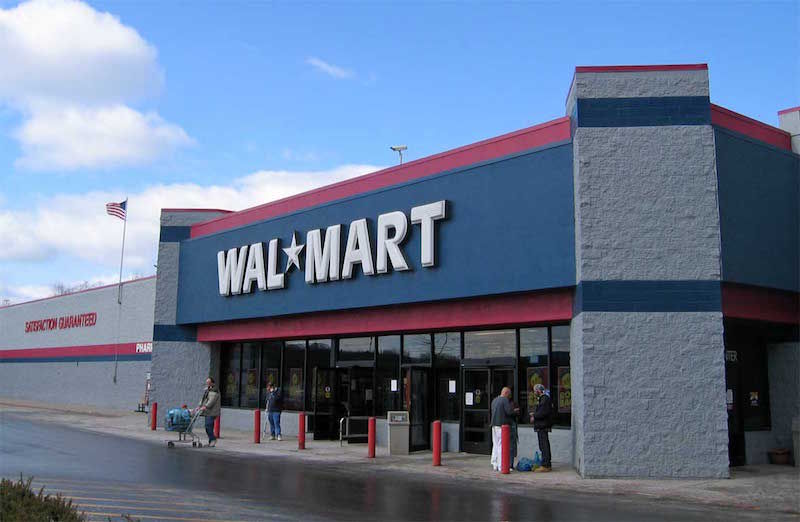
Wal-Mart in particular is making a big push to expand their online presence as holiday season creeps ever closer.


However, investors are still looking for proof that the payoff will be worth all of the time and money in the end. The company stated that it plans to spend approximately $11 billion in its next fiscal year on ecommerce initiatives while still focusing on remodeling its stores.


walmart_exterior


Wal-Mart, while its ecommerce spending might be alarming, isn't new to this type of investment. In fact, its US online sales are second only to Amazon, the company it's currently attempting to surpass.


As one of the most successful brick-and-mortar franchises in the nation, Wal-Mart certainly doesn't have anything to fear as far as holiday sales go. The biggest issue for the company is whether its investors will see the current ecommerce spending necessary to compete with Amazon.


The shoppers


Whether it's brick-and-mortar retail shopping or it begins on a search engine, holiday creep has arrived. In fact, by the time Labor Day rolled around this year, nearly half of American parents had already started their holiday shopping.


Retailers like Macy's and Best Buy have already started their holiday advertising campaigns, even going so far as to deck out their stores in red and white holiday garb.


According to data from last year's Rubicon survey, only 42% of parents had started their holiday shopping by September. This year marks a significant increase in their data, although other studies reveal that Rubicon's numbers may run a bit high.


According to a CreditCards.com report from 2015, only about 14% of American consumers had started thier holiday shopping by September. However, their most recent survey showed the same upward trend in those consumers choosing to shop earlier in the year.


American parents are expected to spend approximately $1,711 during the 2016 holidays, according to Rubicon. And as the BloomReach survey suggests, most of them will be headed to search engines and Amazon for their initial searches.


According to the BloomReach “State of Amazon” study, when holiday shoppers have an idea of what they want, 59% will start on Amazon and 24% will start on a search engine. However, even a Google search is likely to direct consumers to Amazon before any other retailer.


Amazon's presence in the e-commerce community hasn't gone unnoticed by consumers, either. In fact, one in five consumers revealed they were concerned about the company's dominance relative to other retail outlets.


In conclusion


Amazon, while a powerhouse in the ecommerce community, still has a few issues of its own to work out. For one, its artisan-only Marketplace doesn't offer the kind of authenticity and service that sites like Etsy do. Consumers are not only concerned with counterfeit products, but with the company's dominance over the online community.


Nevertheless, the company hasn't pushed search engines or other retailers completely out of the holiday shopping game. A good chunk of consumers still turn to search engines before they conduct an Amazon search, although most search engines direct them to Amazon before other retailers.


Holiday shopping season has arrived, and although Amazon has its faults, 53% of consumers still report having left another website in favor of Amazon. This year's holiday shopping trends just may mark a huge milestone for the company.