Thursday, August 4, 2016

A Different Kind of SEO: 5 Big Challenges One Niche Faces in Google

Posted by Alex-T


When it comes to brick-and-mortar storefronts, local businesses often struggle to compete with neighboring big brands. Statistics show that, even for a well-known local store that's established a strong relationship with its customers and built a community through the years, having such a neighbor can be detrimental. But what about a newly opened business? Does it have any chance of competing with popular brands? My experience has led me to believe there's only one way a locally owned business can overcome big competition: it needs to take advantage of local SEO.

Recently, in collaboration with Accuranker, I conducted a survey that touches upon the difficulties local businesses face when trying to become visible in Google's local results. We analyzed more than 300,000 local SERPs across multiple industries (beauty, medical services, auto services, legal, shopping, etc.) to get a clear understanding of what the chances are for a local site to seem attractive to Google.

One of the more curious insights our research revealed is that the legal services niche is among the most competitive. Sure, this finding isn't rocket science. In fact, I bet on some level you were aware of this (or at least you had a gut feeling). However, this issue is much more complex than it seems. The legal services niche far surpasses other niches in terms of competition and prices.

Does this mean that the legal services niche falls under radically different rules and requires unique SEO tactics? This is exactly the question I set out to answer, and you're most welcome to follow me on my little investigation!

Gathering the data for this article

After reading this article, you'll understand the biggest challenges that any legal website faces when trying to become visible in the SERPs. The data here will help ensure that your future strategies are based on informed decisions. Moreover, you'll be able to streamline your creative process and find non-standard approaches that will cement your success in the legal industry.

To conduct proper research on what SEO strategies local businesses employ in the legal services niche, I took the following steps:


  1. I made a list of keywords unrelated to any brand (which could hardly be classified as local).

  2. I identified the most competitive places in the US for this industry in order to analyze how legal sites build a presence in this extremely aggressive environment

The first step was simply to do keyword research, which involved a bit more manual work than usual - I tried my best to filter out branded keywords and ones that weren't relevant to local searches.

With the help of Statista I was able to get a list of the states in America that have the highest employment rates in the legal niche:

states with the highest employment in law.png

This graph shows US states with the highest number of employees in legal occupations in the United States as of May 2014. Source: statista.com

You can see that California, New York, and Florida have the highest number of employees in this industry, hence these locations are the most "densely populated" by law firms and lawyers, and, as a result, the competition in these states should be higher than in other states. After I made a list of the most competitive locations, I was ready to move on to the next step - analyzing the domains that appear in SERPs for the keywords I had previously selected.

Now let's see what my findings revealed.

The top 5 SEO challenges for the legal niche

The extreme competitiveness of the legal services niche might be explained by the fact that this market generates more than $248 billion USD in revenue (according to a recent report provided by Statista) with only a relatively small number of searches.

To give you a better understanding of the size of the legal services industry in the US, let's compare it with a bigger market: for instance, if we look at ecommerce, we can clearly see that the revenues generated by the two niches in question are nearly the same (ecommerce sales surpass $256 billion USD), despite the fact that ecommerce traffic share figures are four times greater than in legal services. It's safe to say that the legal niche has turned out to be a ridiculously competitive market, because it's an outrageously profitable one. I'm also certain that the success of any SEO activity depends on a deep understanding of how the industry and its major players work.

In the next section, you'll learn about the main challenges that legal businesses face.

#1. Online legal business are dominating local SERPs

Statistics from an IbisWorld report confirm that the online legal services niche was able to generate $4 billion USD in 2015. Moreover, in recent years this niche has been steadily expanding due to the fact that consumers are interested in getting legal services online. That's why it doesn't come as a surprise that a company named Rocket Lawyer generates more than 30,000 searches monthly (according to Google Keyword Planner) by helping users deal with their legal issues online. This number of searches proves that online legal services are gradually becoming popular, and people don't want to spend their time scheduling an appointment with a lawyer anymore.

Now you're probably wondering how this trend is affecting local SEO, right?

Knowing that New York, Miami, and Los Angeles are among the most competitive locations for the legal niche, I decided to find out which sites are the most visible in local search results there. I took into account more than 500 different keywords related to legal services and compiled a list of the domains that most appeared most frequently for those keywords. And here are the top three domains that remain visible in local search results in all three cities:


  • Findlaw.com

  • Avvo.com

  • Lawyers.com

After making this list, I double-checked these websites to make sure that all of them belong to the online legal services niche. I also decided to dig deeper and manually checked the top twenty domains that were most visible across all the locations I analyzed, in order to understand what kind of legal services they provide. I found out that 55.6 percent of the sites I analyzed belong to the online legal services niche. That means that local businesses now have to compete not only with global businesses, but also with online legal businesses that, by default, have better positions in SERPs, as the main goal of their business is to increase their online presence by getting more organic traffic from Google.


#2. Google doesn't give priority to local legal businesses in organic search results

Apart from the strong presence of online businesses in local organic SERPs, I was struck with the steady visibility of the top twenty websites that appear in local search results in New York, Los Angeles and Miami. The shocking truth I discovered about Google local SERPs is that less than 20 percent of sites were unique across all the studied locations. This means that search results are occupied by global and online businesses in 80 percent of cases. Furthermore, the top three most visible domains remain the same in all three cities, and they are as follows:


  • Findlaw.com,

  • Avvo.com, and

  • Lawyers.com.

I also discovered that all three of these websites belong to the online legal services niche, and, despite SEO visibility, have a good number of backlinks. I am of the opinion that local businesses have no chance of competing with them whatsoever.

As I studied the 20 percent of websites that are unique, two curious cases of locally based businesses caught my eye - Injurylawyers.com and Cellinoandbarnes.com. Let's take a closer look at these two websites.

From Injurylawyers.com's “Contact” page, I learned that it operates mostly in Florida. However, I don't think that the reason it ranks so highly in local search results in Miami is because of its physical presence there. Even at a quick glance, it becomes clear that Injurylawayers.com is ranking so high in local results because of its website's overall performance. As you can see from the screenshot below, its website has a good number of referring domains, as well as a decent amount of organic traffic:


Source: ahrefs.com

Another site that caught my attention - Cellinoandbarnes.com - has a branch based in New York. The history of this legal company begins over 50 years ago, and without any doubt Cellino and Barnes is a well-known and trusted bran. Plus, Google recognizes it as a brand. The very fact that its brand name is being searched for more than 6,000 times a month speaks volumes about the trustworthiness of this legal company:


All these facts show that Cellinoandbarnes.com's visibility in New York SERPs is because of the domain's general performance in Google US organic search results:


Source: spyfu.com

My quick research proves that, in practice, Google doesn't give priority to NY-based legal companies and still mostly relies on general ranking factors. And it seems obvious now that any online business can easily outperform an offline SMB legal company by increasing the number of backlinks, brand mentions, and site visits it receives.

#3. The local pack is still a saving grace for local businesses

One year ago, Google implemented a major change that dramatically minimized local businesses' chances of becoming visible in local packs: Google replaced the 7-pack in SERPs with a 3-pack. And I was quite interested to figure out what kinds of businesses now hold these three positions in the legal niche, and whether these results are local.

Despite the fact that local organic SERPs are fully occupied by big online businesses, the local pack still is the best way to remain present in Google for locally based legal companies. My research revealed that 67 percent of sites that appear in local packs for legal services are hyper-local and local. To arrive at this percentage, I analyzed the domains that appear in local packs in New York, Miami, and Los Angeles in terms of their SEO performance in Google US (to do this, I used Serpstat's Batch analysis tool).

I was also curious what share of online presence the local legal businesses that appeared in the local pack had, along with the breakdown by states. To mark sites as local, I checked their their traffic with the help of the Serpstat's Batch Analysis Tool. (I'd like to note that I find Serpstat's figures most relevant for such purposes, as they parse raw data from Google US. You can easily spot which sites are global and which are local.) And here's what I found:


  1. Miami – 60% of legal websites appear in the local pack

  2. Los Angeles – 35% of legal websites appear in the local pack

  3. New York – 15% of legal websites appear in the local pack


This was quite an insight, since I assumed that California would be the most competitive location for the legal niche, because - as you may recall from the beginning of this post - it's the state most densely populated by law firms. Also, it's surprising to find New York only at third place in this list. Yet, as you can see, Miami has the greatest number of local sites that are present in local pack. Therefore, I believe that being featured in local search results in New York requires a lot more resources than it does to achieve the same visibility in Miami. And this is something that every SEO expert should be aware of.

#4. You can't stand out without a site - even in local pack results

It's a well-known fact that Google's local pack provides businesses with the opportunity to appear at the top of Google SERPs even without a website. According to my previous research, which I conducted in collaboration with the AccuRanker team, the local pack works much better for less competitive niches. What I tried to clarify here is whether you can stand out in a local pack without a website in such an unconventional and competitive niche as legal services. Unfortunately, no, you cannot.

To prove this, I analyzed 986 local SERPs in order to figure out if legal brands can appear with or without a website. My findings showed that 86 percent of legal businesses that pop up in local packs have a website. This means that even if your business is visible in local packs without a website, in a majority of cases, it'll be considered by potential clients as less trustworthy, since users usually expect to see a link to a particular domain.

Without a link to a professional-looking website, your business will seem less credible - not only to potential clients, but also to Google. Nevertheless, it's not unusual for large, global companies to be trusted more than small, local ones. Therefore, small companies need to instill confidence in their potential clients by having a website.

#5. There's no correlation between a legal website's ranking number one in a local pack and its number of reviews

I'm certain that every business owner understands the importance of customer reviews. It's a no-brainer that a level of trust is instantly established when a potential client sees that a local business has reviews. And it definitely increases the likelihood of said client to convert. Also, the very presence of Google native reviews is thought to be among the Top 50 local search ranking factors.

However, this study of legal services has already revealed that there are quite a few peculiar ranking factors that business owners need to keep in mind in order to succeed in this niche. That's why I was curious to know whether there's any correlation between a site's number of customer reviews and its ranking #1 in a local pack.

With the help of the AccuRanker team I was able to get the sum of reviews that show beside each result in local pack. Afterwards, I analyzed more than 2,000 local SERPs in New York, Los Angeles, and Miami. And here's what I found:

There's no correlation between ranking in the first position in a local pack and your number of reviews.

For instance, in New York local pack results, the companies that appear in the third position have 824 total reviews. Those that appear in the first – 732. Moreover, I noticed a good number of cases in which a company that had a solid number of reviews was ranked in the third position, while a business that hadn't even been reviewed yet was ranked in the first.

Another striking insight I gained: most legal sites never show their potential visitors more than 2 reviews. Based on this data, I can say that this represents an overall industry trend of a lack of native Google reviews. That's why Google ranks businesses that haven't been reviewed so highly. Even if you have a significant number of customer reviews, it won't help your business rank higher in local pack results.

One final note

Without any doubt, the legal niche presents a lot of unique local SEO challenges that other industries hardly ever face. The high penetration of online legal services into the existing legal market is changing the current business landscape - in particular, it's drastically affecting local results. Online legal businesses are stealing an outrageous amount of web traffic from local companies, without giving them even a slim chance of ranking as well in local SERPs.

Fortunately, local legal businesses still have priority in local packs, but the highly competitive environment is forcing them to improve their online presence by creating a website. Since a majority of the companies that appear in local packs have sites, your potential clients' expectations are ratcheting up. In fact, this trend may reinforce searchers' opinions that businesses without a website are untrustworthy. Furthermore, it seems that Google also prefers to show users local legal businesses that have a site, rather than those that don't. The only good news is that your number of reviews doesn't really influence your rankings in local packs.

Still, if a local legal business is interested in attracting clients via the Internet, it shouldn't hesitate to look for alternative ways of generating traffic in both organic and paid search channels.


Sign up for The Moz Top 10, a semimonthly mailer updating you on the top ten hottest pieces of SEO news, tips, and rad links uncovered by the Moz team. Think of it as your exclusive digest of stuff you don't have time to hunt down but want to read!

Voice: the future of next-gen search – expert predictions

The expansion of digital systems has resulted in the recent rise of voice search.


More people today are using various digital assistants created by the major players of the technology market, such as Apple's Siri, Google Now, Microsoft's Cortana, and Amazon's Alexa.


The development of these systems and the recent improvements in their ability to interpret natural language queries have made voice search easier and more accurate.


By examining the 2016 edition of Mary Meeker's annual Internet Trends Report 2016, we can see an explosive growth in voice queries, according to Google Trends.


In her report, Meeker notes that queries associated with voice commands have risen more than 35-fold since the launch of the iPhone and Google Voice Search.


To adapt your digital marketing efforts to this trend, you should pay attention to how people are searching.


voice search semrush


Recently, SEMrush had a roundtable discussion on voice search with three industry experts: Will Critchlow, Chris Marentis and Neil Walker.


During our talk, they shared some great insights into how voice search is shaping today's digital marketing, as well as their own predictions for the next generation of search. Below you will find some new opportunities for capitalizing on voice search growth.


1) Voice search isn't a big thing – yet


Mobile devices have already changed the world of search engine optimization in many ways. But now, there's a lot of talk about the impact that voice search will have on the SEO landscape.


Some experts believe that the full potential of voice search has yet to be seen. “For me [voice search] is still in that uncanny valley where it's not quite good enough to rely on,” Will Critchlow explains.


It's still too early to tell how voice search has influenced SEO, but it's constantly evolving. “We're still in the very early days, but I can see voice search literally changing the search landscape in some way over the next few years,” says Neil Walker.


Chris Marentis points out that it's really interesting how accurately artificial intelligence (AI) voice control interprets what users ask for. “I think it's a conceptual framework that we are going to think about a lot, test and validate over the next few years,” he points out.


blue brain


Nevertheless, voice search is on the rise. Its popularity is increasing, because providers are improving text-to-speech technologies. Will Critchlow believes that the quality of speech recognition is going from strength to strength.


Just in one year – between 2014 and 2015 – voice search grew from “statistical zero” to 10% of overall search volume globally, according to Timothy Tuttle from MindMeld. This shift accounts for the incredible number of voice searches per month – 50 billion.


Millennials and Generation Z are more likely to engage with voice search.


In 2014 a study from Northstar Research revealed that 55% of teens (age 13-18) use voice search more than once a day. And it comes as no surprise, because computers and technologies are quite indispensable to younger generations. They have grown up with these things, as Chris Marentis points out.


Takeaways: 


Voice search is still evolving. One of its major problems is related to its ability to understand different users, including their accents and inflections. Nevertheless, digital assistants are getting better at understanding these differences, and search continues its shift towards mobile devices.


This will result in the further growth of voice search, and businesses can't ignore it.


2) Voice search has changed the way people interact with search engines


Obviously, the human brain structures written and verbal information differently, which means that written search queries differ from verbal ones.


Today users expect to find exactly what they're looking for on the first try, because Google is constantly improving its search capabilities.


Search engines today, especially Google, are working to align the process of online search with so-called “natural language,” or everyday speech. Voice-based queries are different in nature. They tend to consist of longer phrases, as well as complete sentences and questions.


It's also interesting that experts are expecting another significant change that has nothing to do with voice search.


“Alongside voice search, we are going to see a huge growth in query-less search,” Will Critchlow says. Platforms like Google Now, Apple's Siri, and Microsoft's Cortana are improving the way users interact with search in a predictive, query-less manner. This principle is based on a semantic prediction of needs.


In other words, search engines return results based on the user's historical behavior and the current context. “I think that's where voice search really comes into its own – when your device is saying to you some things you might want to know,” suggest WIll Critchlow.


The growth of voice search is leading to more natural language queries. These queries contain larger amounts of contextual information about users' intent.


Takeaways


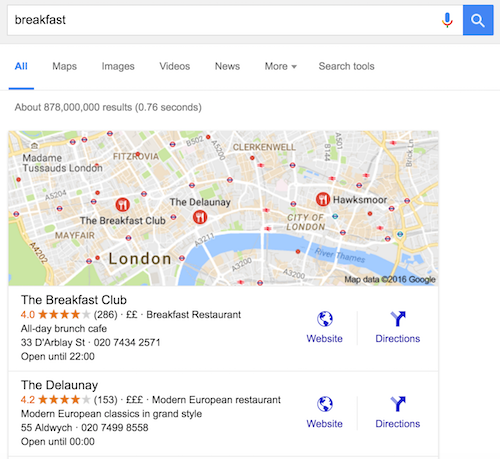
Will Critchlow told us how he was just searching “breakfast.” Years ago, this type of search would have probably turned up a Wikipedia article on the subject. But if you searched this term today, you might get a list of highly rated restaurants that are currently serving breakfast.


google breakfast search


Also, AI technology is evolving to better understand user intent and context based on various elements, such as previous search queries, location, past user's behavior and actions.


3) Google continues to learn


As we have already discussed, today digital assistants are more advanced. Although these systems might not understand exactly what we want at first try, they're getting better, thanks to the improvement of machine learning and artificial intelligence.


Neil Walker believes that voice search is just the beginning, and there's no doubt that Google is always learning.


Voice-activated search systems, including Siri, Cortana and Alexa, are based on similar technology that provides searchers with direct results, rather than a search result page.


A screenshot of a conversation with Siri in which the user (our editor Christopher Ratcliff) tells Siri


It's interesting that today we can already get some information we need without actually visiting a website because of Google's special featured snippet block at the top of SERPs, which shows a summary of the answer to a user's question.


“We are already getting used to the fact that answers are being delivered straight to us without having to click on any sites,” Neil Walker explains.


Soon there will be no need for users to type blunt queries into their smartphone's browser, because they will be able to pick up their phone and literally ask it what they want. And digital assistants will start focusing on the meaning behind a particular query, rather than a set of query keywords, and provide users with instant answers to their questions.


Because of the development of machine learning businesses will have to rethink their content, make it more conversational, focus on sentence structure and use natural phrases, rather than basic keywords.


Takeaways


Google, along with other technical giants, is investing in artificial intelligence, transitioning from text-based search algorithms to more semantic systems that can deliver more relevant results to searchers – results that they really want.


Today the search engine is making efforts to serve up results that are more in line with the real intent behind a user's search, rather than the actual words they use.


4) Conversion rates decrease


We also asked our guest experts what opportunities voice search can provide for online businesses that are looking to increase their conversion rates.


Will Critchlow expects to see lower conversion rates. And here's why… Voice search will continue to get better at natural language. The whole process of search might shift from the current model towards one that looks more like a chat bot, for example. SERPs might not look like a classic web interface in Chrome. Instead, users might see images, buttons or even dropdowns.


“I think we're going to see a different kind of conversion and, probably, lower conversion rates,” Will Critchlow pointed out. He also added: “I'm more interested in increasing an absolute number of conversions without worrying necessarily about conversion rates.”


Neil Walker agrees with his point and thinks that the major challenge for digital marketers will be to predict what elements are going to be displayed in SERPs without users visiting a website.


Takeaways 


In fact, we don't know exactly what changes voice search will bring to digital marketing and search strategies. But voice search is not a thing of the future. It's here today.


To capitalize on voice search, businesses should grasp new technologies and be open to exploring new avenues in the search industry.


5) Intent search


We already know that RankBrain, Google's machine learning artificial intelligence system, was designed to help the search engine provide users with the most relevant search results.


According to Danny Sullivan, it's mainly used as a way to interpret the queries that people use to find pages that may not even contain the exact words that were searched before. What sets it apart from other existing algorithms is its ability to learn.


Will Critchlow suggests that online businesses must rank for user intent. RankBrain technology doesn't try to match the words on your webpage to the words that a person spoke. When trying to figure out the best search results, it has to do with interpretive step.


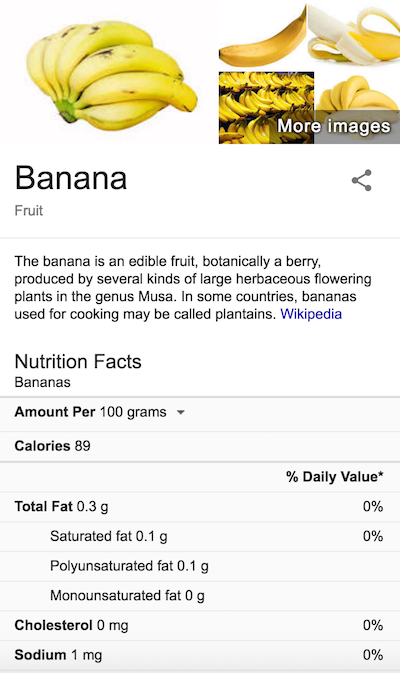
What's more, in the future, Google might return more limited results. For example, if a user wants to know the nutrition facts for a banana, they don't actually need to read a full page of content to find their answer.


google banana search


In this example, they're just looking for some brief information, some numbers, and maybe even a couple of simple sentences. Google doesn't send you to the website and might not even show you the website. Will Critchlow believes that increasingly the search results are going to be an answer or an action.


Chris Marentis also feels that search is moving away from simply displaying websites. Especially when it comes to local search, your strategy should involve more than just creating a contact page for your company. Businesses should consider encouraging their customers to leave reviews both on their site and through platforms like Yelp.


Chris Marentis suggests: “If you are a local window replacement contractor and you don't have a great presence on Yelp, then you're not going to rank on the first page of Google organically.”


Takeaways


Today, marketers need to be as customer-oriented as ever. If you don't understand what most users mean when they use a certain query, you might be targeting the wrong keywords.


It's important for companies to rank for the user intent. Businesses should consider using more long-tail keyword phrases that highlight user intent and create user-intent models to better understand where the searcher is in their customer journey.


Needless to say, voice search is already changing the SEO and search landscapes. The only question that remains is, how are brands going to handle this shift?


Image credits: SEMrush design


Olia is a PR/Content Manager at SEMrush and a contributor to SEW. You can connect with Olia on Twitter or LinkedIn.

Google to Highlight the Best Reviewed Places to Eat and Drink by @SouthernSEJ

Google announced a change to its search results today which is designed to guide travelers to the best restaurants and bars.

The post Google to Highlight the Best Reviewed Places to Eat and Drink by @SouthernSEJ appeared first on Search Engine Journal.

Wednesday, August 3, 2016

Live-Updating AMPs Now Available for Beta Testing by @SouthernSEJ

Live blogs are about to get even faster thanks to live-updating AMPs, announced this week by the Accelerated Mobile Pages project.

The post Live-Updating AMPs Now Available for Beta Testing by @SouthernSEJ appeared first on Search Engine Journal.

A 12-Step Guide to Growth on Medium by @annaleacrowe

A look at how Medium is evolving as a social media and publishing platform, how they're changing marketing, and how to grow your audience in this SEJ post.

The post A 12-Step Guide to Growth on Medium by @annaleacrowe appeared first on Search Engine Journal.

Diagramming the Story of a 1-Star Review

Posted by MiriamEllis


Researchers estimate that it's up to 25 times more expensive for a company to acquire a new customer than to keep an existing one, making ongoing investments in consumer satisfaction a priority. There's nothing more disheartening to a local business owner than receiving a very negative review - and given that as little as 13% of consumers will patronize a business with a 1- or 2-star rating, there may be nothing more important than the owner taking every possible step to resolve negative reviews with speed and skill.


Negative reviews don't write themselves. While looking at restaurant reviews recently, I came across an owner-consumer interaction that perfectly encapsulates the typical steps that take a transaction from bad to worse. It serves as a diagram of how these costly scenarios begin, proceed, and escalate, ultimately resulting in permanent damage to the company's reputation.


The blame isn't one-sided, and my goal here isn't to make the customer or the owner out to be "the villain." Rather, I'd like to point out key elements that actually worsen the situation, rather than improving it. Both owners and consumers sincerely want to feel satisfied, and the good news is that, in most cases, the only thing standing in the way of this is responsible communication.


Let's take a look!


Image courtesy of Blake Patterson on Flickr.


The key to the "Food Truck Fiasco"


This story begins at a family-owned Philly Cheesesteak food truck that signed up to be a concession at a festival in the Southwest. One customer describes what happened on the day of the event this way, with my interpretation to the right:


Key to Review


Grabbed "The Storm" (cheesesteak with green chiles) for $9 when they were parked outside the bike and brew festival.

Customer sets the scene for his story.

The woman told us it would take 20 minutes, but when we arrived back it took at least an additional 15 minutes to get our food. I'm sorry, but 45 minutes wait for a sandwich simply isn't acceptable. The sandwich was super small for the price, I could've eaten 3 of these things easy and I'm not a big person. I expect more for a $9 sandwich

The legitimate complaint in wait time, improper expectations being set, food portions, and pricing.

These are honest grievances.

from a crappy concession trailer with zero overhead.

The revenge. Customer vents his disappointment with cutting, dismissive language. He insults the business.

EDIT: Like several other Yelpers, I had originally rated them higher, but reduced my rating after I received a nasty email from the owner shaming me for my feedback. Seriously, that is how you treat customers after making them wait 45 minutes for a super overpriced sandwich? If you can't handle honest feedback, then you should probably find another line of work. Keep it classy, [name removed].

The worst possible outcome: owner's response leads to consumer editing his original review to dock stars and complain of a second bad interaction with the business.

The customer is permanently lost, and the world is informed.

The customer's complaints are certainly understandable: he was honestly disappointed that it took so long for his food to be ready and then felt the portions were overpriced. It didn't help matters that the staff over-promised and under-delivered in estimating the wait time. Up until this point, the consumer is blameless. But then he makes two mistakes:


  1. He makes no mention of voicing his complaints to the owner or staff in-person, at the time of service.
    Upon receiving his small sandwich after 45 minutes of waiting, it would have taken him just one minute more to say, “I really want to speak the owner about this. I'm not happy with what just happened.” It's the customer's responsibility to speak up on his own behalf - to the let the owner know there is a problem for him to resolve.


  2. Having failed to take on the responsibility of voicing his complaints directly to the owner at the time of service, the customer then vents his feelings to the world in the form of a negative review.
    Not only this, but his remarks about a "crappy concession trailer" are mean-spirited, showing zero respect for the reality that this is, in fact, another human being's livelihood. Being dismissive of someone's job is uncivil, snobbish, rude, etc. Using language like this is unlikely to make friends, and is unlikely to bring out the best in the owner whom he is now, in fact, goading and insulting.


Regardless of the customer's tone, the owner's job is to be professional at all times. I've seen adept business owners handle even the rudest customers with a skill that leaves me in awe, but in this case, the owner of the food truck went down the worst possible road. Far from remedying the initial negative review, the owner's response brought the customer back with further negativity, including taking off stars. Here's how the owner responded (Eds. note: original spelling and grammar intact), with my interpretation on the right:


Owner's Response


Key to Owner's Response


5/23/2016 I'd have to say, I'm shocked and appalled at this "customers" behavior. However, if you look at his profile...it is really not all that shocking. Many businesses have felt the wrath of this poor shmuck. And just so everything is clear and on the table...I'm copying and pasting our so called "nasty" email we sent him. You can be the judge:

Calling your customer names and trying to shame him is the worst possible way to begin an owner response.

Hello,


I am one of the owners of [business name removed]...along with my wife and father in-law. I just wanted to take a minute to help you understand the impact of your publicly posted criticisms.

The owner's job is to apologize, not to correct or instruct the customer.

First, you should understand that we are an 8 by 16 truck that was inundated with 100's of orders all at once. Simply put, we did the best we could to get your sandwich out as fast as possible. With the space we have, grill size, etc...we can only do so much.

It is not the customer's job to be understanding about the business's limitations or problems. He expects to receive service. That is all.

We tried to be as honest and as accurate as possible with regards to wait time.


As for the quality, we certainly want our customers to enjoy our food. This is why we cook to order, and try to maintain a level of freshness that other trucks may not. Given that you didn't like it, we would have preferred to have a chance to make the situation whole. However, you clearly chose not to afford us that opportunity.

An explanation of the business's goal to provide quality product is good, but the real gem here is the owner's pain that the customer didn't complain in person.

This is the owner's honest disappointment.

In regards to "no overhead." Well, that's just so far from accurate it made our heads spin. Perhaps consider: food costs (certified angus beef is not cheap), labor for our employee, propane, the generator rental fee ($200), the city temp license fee, the fire inspection fee, fees to do the event itself, the gas to tow and run the gene, water....I could go on, but hopefully you get the point.

The customer may be ignorant of how the business operates, but this is not the time to explain its costs. You haven't yet earned the customer's friendship or empathy.

He's going to walk for lack of an apology.

Lastly, on a more personal level, you should understand that we worked two 14 hour days for this event. We have a 10 month old son that was at his grandparents, suffered from great separation anxiety, a cried himself to sleep both nights. We finished cleaning at 1 am this morning only to wake up no your negative review about our "crappy food truck."

This is completely over the top. Customers do not want to hear about crying babies. They are paying for service, not sob stories.

At the same time, the owner admits he's stung by rude language. This is real.

Overall, my ultimate goal with this note, is to help you better understand the impact of your words. And to understand that we are hard working people, who genuinely care about our business. When you are unhappy with a level of service, please, by all means, contact them privately and at least give them the opportunity to make the situation right. Criticizing them publicly gives them absolutely no chance to do that, creates a lasting stain on their hard work, and potentially takes food out of their children mouths. Had you contacted us, we would have offered you a free meal at our regular location or refunded your money.

The closing sums up how wrong and how right this owner's mindset is.

He is totally wrong to believe the purpose of an owner response is to correct his customers.

But, he's totally right that the lack of opportunity to respond well to an in-person complaint is a major pain point for his business, and millions of other businesses, too.

Reading between the lines of the owner's response, a picture emerges of a business that underestimated how busy it would be at an event and did not have adequate cooking facilities or staff to fulfill orders within a normal timeframe. This was the initial mistake that set the stage for all that transpired. Unfortunately, the owner then worsened the scenario by making the following additional mistakes:


  1. He confused his business with himself.
    Learning not to take business criticism personally is Reputation Management 101 for all owners and staff, and it can be the hardest instinctive mindset for anyone to overcome. If you've put your heart into your business, it is genuinely challenging not to view criticism as a personal attack … but you mustn't get stuck there. You're offering goods and services; paying customers expect to receive them. Business is transactional, not personal, and the customer is not signing up to hear about your fatigue or family problems. All this customer wanted was the sandwich he ordered. This is not personal.


  2. He refused to accept responsibility for the customer's bad experience.
    The response penned by the owner is not an admission that the customer's legitimate dissatisfaction stemmed from poor planning or poor execution on the part of the business. The owner refuses to say, “My fault, I'm sorry.”


  3. He failed to see the owner response function as his last chance to save a bad situation.
    He views it as a place to justify himself by correcting the customer's attitude, expectations, and sentiments. Once the negative review has already been published, the owner response function is likely the only life preserver left.

    Given the costliness of replacing a lost customer and the way a negative review can cost a company future business, the owner response field is not a platform for a lecture; it's a platform for making the greatest possible effort to make amends.


  4. Finally, the owner devolved into personal insults, betraying a fundamental lack of professionalism.
    A business is professional. A customer is just a person. Even if your customer cannot utter a single sentence without using colorful expletives, professionals are meant to be trained to communicate in business-appropriate language at all times. What this owner has done is to reveal to the whole world that he refers to his customers in insulting terms if they have a complaint. Once anyone reads that, they know not to expect empathy if they encounter a problem with the business.


Perhaps the most powerful element of the owner response function is that it is not just for a single customer to read, but for all future customers to read. Respond well, and you may not only win a second chance with the customer, but also prove to all future potential customers that they will be treated with respect, empathy, and fairness by your company.


Crafting a powerful owner response


If the food truck owner were my client, this is a sample of how I would have helped him respond, with my key on the right:


Owner's Response


Key to Owner's Response


Dear Jim,


I hope you can find it in your heart to accept my apology for the poor experience you had on the day of the event. This was totally my fault.


Greet customer personally, if possible, and begin with a sincere apology. Take responsibility for your business, as its owner.


I underestimated how swamped we would be and would have hired extra staff for the day if I'd realized 10,000 people were attending. This was our first time doing this event, and my failure to correctly predict the number of orders we'd be filling is what led to you waiting 45 minutes for your sandwich.

I feel really bad thinking of you having to stand around waiting for your lunch when there was so much else to do at the festival. We make each sandwich fresh to order and my staff simply got inundated.


Where possible, explain how the mistake happened.


Validate the customer's experience by expressing empathy for their situation.


Be accountable for any errors.


I wish you'd had the chance to talk to me about this in person at the time, but I realize it may have been too hectic to reach out to me that day. I would gladly have given you a full refund or a free cheesesteak to try to make up for the inconvenience.

Please, accept this as my invitation to stop by our regular location at 123 Main St. for a cheesesteak on me, which I promise you'll receive within our normal 10-minute timeframe.

If you come, I'd really appreciate you taking a minute to let me know, in person, anything else you feel we can do to improve our food or service. This is our family business and we are so invested in serving our community well.


Encourage all readers to believe that, if a problem occurs, you would love to have them speak directly to you or staff about it right at the time of service.


Since the presence of the negative review means an in-person complaint likely never happened, offer an appropriate means of atonement and a guarantee of a better experience, if the customer will give you a second chance.


Again, please accept my apology, Jim, and please give me a chance to make it right.


Thank you,


Bill Williams
Owner, Philly Cheesesteak Truck


Close with a repeated expression of your sincere regret, your offer to make things right, and an identification of yourself as the owner of the business.


Contrast the owner's real response with this sample suggested response, and you are likely to come away with a completely different, more positive impression of the business. A few quick suggestions for coming across well:


  • Keep length reasonable; don't write a novel

  • Beware of sounding like you're on your high horse; use common, neighborly language

  • Make sure you've apologized

  • Where appropriate, explain what went wrong and describe any steps you've taken to correct an issue

  • Extend your offer of something nice to try to make it better

  • Welcome further feedback; it could lead to the reviewer updating their review with positive sentiment


Those are quick tips that should immediately help you to improve your reputation in the eyes of all who read your owner responses. Ready to dig deeper into developing a powerful, permanent mindset for all future tough transactions? Read on.


3 empowering tactics for better reputation management


Every business encounters criticism. Meet this reality better prepared with these three tips:


1. In business, we wear the mask.


When your spouse tells you're inattentive, when your friend points out that you chew with your mouth open, when your children berate you for not letting them adopt another dog, it's personal. It's your privilege to respond with tears, embarrassment, a lecture, or whatever you feel you need to express at that moment, reacting to personal criticism in your private life.


In business, it's different. In a civil society, and particularly in a business setting, it's simple reality that we tend to suppress strong reactions and strong words for the sake of professionalism.


If you feel the color rising to your face when a customer insinuates that you actually founded your whole company for the purpose of ripping him off for $9.99, try picturing in your mind the image of the most serene, inscrutable face of a statue you've ever seen. Perhaps it's the face of the Buddha, or a classical Greek god, or a Tlingit totem being. Imagine donning that mask, like a zone of safety, between the disgruntled customer's business complaint and your personal life. It's cooler behind the mask and you can respond to almost any commercial criticism, knowing your personal feelings are completely safe behind the barrier you've established.


2. Muster empathy to integrate as much of yourself into the interaction as you feel comfortable with.


Now that you've tried on the mask, and you've got your worries, your insecurities, loves, family, and everything else personal safely behind its barrier, see how much of yourself you feel safe putting outside the mask for the world to see.


Your life may feel too divided if your business and personal worlds are kept 100% separate, and you may not be able to pour the full passion of your heart and intellect into the business you are building if you have to be a statue at all times. Some customers may be so irrational in their expectations or conduct that the only way to manage them is with a marble coolness or a wooden face, but hopefully that will be the exception. For most customers, this technique will help you integrate your genuine human feelings into a situation in which distress is being expressed.


Picture a person you not only really love, but also of whom you feel protective. For just a moment, substitute that special person for the complaining customer. Imagine that it is your grandmother who had to wait in line for 45 minutes (she might have gotten heat stroke), or your nephew who was still hungry after being overcharged for lunch (he's had trouble getting up to a healthy weight), or your spouse who was treated rudely (how dare someone disrespect him/her), or your friend whose product broke after a week of use (she can't afford to replace it). Suddenly, that customer is transformed from an unknown complainer into an important person who deserves fair, empathetic treatment.


Integrate as much of the empathy you'd feel for a friend or relative as you can for the customer. The health of your local business, and your good feelings about the way you conduct it, depend upon turning as many unknown neighbors as you can into loyal customers and, hopefully, friends.


3. Master catching complaints before they become negative reviews.


It may seem counterintuitive to want to receive as many complaints as possible, but when you consider that they are your best safeguard against the publication of negative reviews, making your business complaint-friendly is incredibly smart! Implement these tips:


  • Install visible in-store signage detailing options for requesting help with a complaint. Wall signs, window signs, signs on counters, tables, menus, aisles, print materials, and company vehicles can all alert customers to complaint-receptivity.

  • Signage can include a complaint hotline text message number and phone number, both of which should be regularly monitored for activity.

  • One recent survey found that 57% of consumer complaints revolve around poor customer service/employee behavior. This means that the quality of your hiring and training practices are the key to ensuring satisfaction. Go one further. Be sure all staff are trained to resolve complaints or escalate them through a defined hierarchy (manager, owner, etc.).

  • Instruct all staff who deal with the public to invite complaints with clear language, like “Was there anything you couldn't find, anything we can do better, etc.?”

  • Be sure your website is mobile-friendly and includes a visible complaint form.

  • Gather emails at the time of service and email customers shortly thereafter to request feedback, both positive and negative. Follow up quickly on any negative experiences and make every effort to remedy them.

  • Assign a staff member for each store who regularly checks popular social media sites for mentions of your business and who is empowered to reach out any time negative sentiment appears.

  • Document all complaints, identify patterns, and implement solutions. Your complaint document will be an absolute goldmine for resolving common problems before future customers experience them.

  • Consider purchasing paid products that help you analyze your social media opportunities and manage your reputation. Followerwonk and GetFiveStars are good places to start. Don't leave things up to chance - know your stats and actively control the conversation that's happening about your business! Be as connected and engaged with your consumers as you possibly can.


Speaking of GetFiveStars, I highly recommend taking the time to read the series of articles they've been publishing regarding the subject of consumer complaints, including some really insightful surveys. My favorite tip from co-founder Mike Blumenthal is this one:


Make a complainer feel like your most valued customer because, in some ways, they are.”


Happier endings for everybody


The art of customer service is one you'll be training yourself and your staff in for as long as you serve the public. Even if you've made every effort to catch complaints on the spot, no method is foolproof and every business is almost guaranteed to have to deal with a negative review here and there.


Some customers will not speak up for themselves, even when expressly invited to do so, because they are shy, dread confrontation, or are so accustomed to being treated poorly that they don't believe their voice will be genuinely heard. They may utilize online reviews as a substitute for having to "make a fuss" in person about their dissatisfaction.


Then there are those truly awful customers no business can avoid. They may have entitlement issues, unrealistic expectations, unpleasant personalities, or even have made it a life practice to throw tantrums in hopes of receiving free stuff. They may utilize online reviews as a place to spew rude language and invent false accusations because they have personal problems.


No business is immune to either type of customer, but if you plot out your company's reputation management course, you can weather most storms and end up looking like one smooth sailor! Your plan might look something like this timeline:


onestar5.jpg


I continue to be amazed at how many negative reviews slip through and sit unanswered on major review platforms, raising doubts in potential customers' minds and giving a neglectful impression of the business.


With the right mindset that delineates comfortable boundaries between your personal and business worlds, cultivation of empathy, a clear plan, and concentrated devotion to staff training, no business need suffer dread of negative feedback, and can, in fact, view it as a powerful resource for making meaningful improvements pre-guaranteed to resolve existing issues. And when those negative reviews do squeak through your process, a beautiful, professional response can write a happy ending, just like this one:


onestar4.jpg


*Review star screenshots used in this post from Yelp.


Sign up for The Moz Top 10, a semimonthly mailer updating you on the top ten hottest pieces of SEO news, tips, and rad links uncovered by the Moz team. Think of it as your exclusive digest of stuff you don't have time to hunt down but want to read!

Google's Rolling Out AMP to the Main SERPs – Are You Prepared?

Posted by jenstar

Are you ready for AMP? Ready or not, it's coming to Google search results, and it's arriving in a big way. Google has announced that they'll be showing Accelerated Mobile Pages in their search results for the “ten blue links.”

This means that sites that aren't news-specific now have the opportunity to show AMP pages in Google's search results.

AMP is a very lightweight version of a webpage that has been stripped of the many elements that cause a regular webpage to display slowly, such as tons of cookies, third-party Javascript, and slow-loading ad networks. This results in a page that loads lightning-fast, which is great for those who are on slower connections or simply don't want to wait for a regular, heavier page to load.

AMP has had a fairly positive reception both from site owners and from users. It's much faster and more streamlined for searchers, especially on mobile devices that tend to be a little bit slower connection-wise.

Not a ranking boost

It's important to note that AMP pages in the mobile search results do not receive an additional ranking boost. Google currently has the mobile-friendly ranking boost, and because AMP pages are mobile-friendly, they receive the same ranking boost.

There isn't an additional incentivized reason to use AMP strictly for ranking purposes. Don't switch everything to AMP simply because you think you'll get an additional ranking boost to help you beat out competitors.

There are indirect ranking benefits, though. For example, if searchers seek out AMP results, some sites could see higher clickthrough rates on their AMP pages. And as consumer awareness grows about AMP, that will likely rise.

Replacing mobile results

Google isn't showing additional search results based on AMP specifically. Sites with AMP won't show two versions of the same page in the search results, one mobile and one AMP. Rather, if any of the pages in the SERPs have an AMP version, Google will show that instead of the mobile or desktop page that would normally appear.

Just as a mobile-friendly page has a tag at the front of the description snippet showing that it's mobile-friendly, AMP has the same thing. For AMP, those results are tagged with AMP and an encircled lightning bolt before the description.

Will you be penalized for not displaying AMP?

No, Google is not planning to penalize a site simply because it isn't AMP. Your site will still have the same positioning in mobile search results as the mobile version of the page.

Google will simply replace the mobile-friendly page - or the desktop page, if a mobile-specific page isn't available - and show the AMP version of the page.

For sites that don't have an AMP version of their page in the SERPs, Google will opt to show the mobile-friendly page first, or the desktop page if there's no mobile-friendly version. But sites that are AMP-less will not be demoted in any way.

Do other ranking factors apply to AMP?

There's no reason to believe that some of the regular ranking factors wouldn't apply to AMP pages, especially for those websites that are currently AMP-only. However, because of the nature of AMP, they likely wouldn't be a concern.

This will include things like page speed. Because AMP pages are significantly faster than mobile pages, there's no reason for a site owner to worry that they could be negatively impacted in rankings because of slow page speed.

Likewise, with the above-the-fold algorithm that targets sites with significant ads above the content, this again isn't cause for concern as most AMP pages are “ad-light.”

But it is important to remember that while Google is crawling the mobile version and AMP version of pages, rankings are based on the desktop page. Thus, faults with the desktop page - such as slow page speed - could impact the overall performance of your AMP page positioning.

Should sites ditch their mobile version for AMP?

This question is going to become a bit more interesting as this rolls out to the 10 blue links. There are sites that are currently only available in AMP, such as the AMP Project website itself. But with Google now showing the AMP version in place of the mobile version, should site owners be concerned about having a mobile site?

Well, as of now, this is a Google AMP initiative. Other search engines haven't announced the use of AMP in their own search results. First you'll need to consider whether other search engines have issues with sites that are AMP-only - for reference, Bing has no problems indexing AMP-only sites.

Another consideration is that AMP pages are definitely more bare-bones than your typical mobile page. You need to look at it from a user-experience point of view. Are there elements on a page that will negatively impact your customer's experience if they're not displayed on AMP?

Also, look at it from a resource perspective. For sites that maintain a separate m.site already, maintaining three versions of the page could be impactful from a resource and work hours perspective. This won't be as much of a concern for those using responsive design, since changes made to desktop automatically get rolled out to the mobile version.

Will users gravitate to AMP results?

Just as many searchers gravitate towards search results that are tagged "mobile-friendly," it's very likely that some searchers, especially those on slower connections or those concerned about their data usage, will gravitate to those results that are in AMP format.

Also, because AMP pages tend to be less ad-heavy when compared to their mobile counterparts, some prefer AMP for this reason alone.

How popular is AMP?

At Google I/O, Google revealed that it has more than 150 million AMP documents indexed in their search results. And those documents are coming from 650,000 domains.

Many new sites are getting on board with AMP daily, and many large sites have added AMP pages to their entire website.

Is it country-specific?

Google is still rolling out AMP in the news carousel internationally. When AMP rolls out in the "ten blue links," it will be an international launch. So even if your country isn't currently showing AMP in the news section of the search results, AMP will show in the main search results when this goes live.

Is it live now?

No, this isn't pushed live in the SERPs right now. Google has not said precisely when this will happen, other than they'll be making “this feature more broadly available later this year.”

Google notes that they've delayed this launch to allow sites time to implement Accelerated Mobile Pages before it goes live for all results. Because of AMP being so new and due to the learning curve involved, pre-announcing the change is particularly welcome in this case.

Ecommerce sites

Ecommerce sites can effectively implement AMP, and many have successfully done so in preparation for the suspected launch. But with no specific timeline for when it's going live, there's a good chance this could go live in time for the upcoming holiday shopping season.

At the very least, ecommerce sites should make sure their content pages are AMP-ready. It doesn't seem as though the various shopping carts have made their software or plug-ins AMP-friendly yet. But I expect that, on the heels of Google's announcement, they're scrambling to make their carts (or at the very least the product pages created through the cart software) AMP-friendly.

How to view AMP in search results

Google is only showing this to searchers who search through the Google AMP Demo URL, which can be accessed at g.co/ampdemo.

The demo shows how Google currently plans to display AMP in the search results, although Google could change the appearance before the official launch goes live in the SERPs.

Tracking AMP analytics

For those who have yet to set it up, Google does include information about AMP in their search analytics. You can drill down and see the specific keywords, positioning, clicks, and more just for AMP alone.

To find it, login to Search Console, click on Search Traffic, then Search Analytics. Underneath “Search Appearance” you can select “AMP.” Now you can drill down into AMP by pages, queries, etc. to learn more about how your AMP pages are seen and performing in search.

Setting up AMP

For those that are using a popular CMS such as WordPress or Joomla, there are already plug-ins to convert pages into AMP format. This makes it very easy for websites to make their websites AMP-enabled for searchers looking for AMP specifically.

Wordpress AMP Plugin

Baby-step your way into AMP

You don't have to implement AMP across the entire site at once. You can choose to test it out on a few pages first, or convert sections at a time so the errors are less daunting. Those errors would also be cleaned up as you roll out the next section of the site to AMP.

AMP errors

It can take up to a week or so for AMPs to show up in Google Search Console, so it's important that you go back and check which AMP errors show up on your site. There are some common errors, usually related to markup used in themes or missing logos, but Google's help documents are fairly intuitive.

Google shows AMP errors on a per-page basis in their Google Search Console error reporting. And until these errors are fixed, those particular pages will not show AMP in the search results. The pages that are error-free will show. Site owners can correct the most widespread or significant errors first, then tackle the individual pages with errors.

AMP errors also show up on individual pages for specific elements on the page, such as where you might have embedded video or other elements that are not AMP-friendly.

You can find AMP errors, along with the number of indexed AMP pages, in the AMP section (within the Search Appearance section) of Google Search Console.

Google also has an AMP validator available.

Advertising on AMP pages

For those site owners concerned about loss of revenue, there are ad networks that comply with the AMP standards and can be used on your AMP pages.

The AMP Project maintains an extensive list of supported ad networks, including the most popular ones (AdSense, DoubleClick, and OpenX).

Social sharing & AMP

One of the newer features that Google has added to AMP is the ability to include share buttons for various social media platforms. Some site owners were reluctant to lose the potential for shares, since many sites derive a significant portion of their traffic this way.

The tag doesn't yet support all social media platforms, but it supports the most popular ones (such as Facebook, Twitter, Pinterest, and Google+).

Checking for AMP validation

There's a great extension for Chrome that will show you if an AMP validates properly, as well as show you any webpage that has an AMP version available. This is pretty handy if you need to do competitive research and wish to learn more about the pages or types of pages that your competitors have AMP enabled for.

The lightning bolt will appear green for a page that is AMP, and it will show blue with a link to tell you that an AMP version of the page is available. Just click it to view the page as AMP instead.

This extension also enables you to view the page from a desktop computer. Right now, the Google AMP demo requires you to use it from a mobile device, which isn't ideal for those looking at AMP from a site-owner perspective.

Getting help with AMP

Google also has an AMP support forum on the Google Webmaster Help forums for site owners running into any issues implementing AMP or getting it indexed properly. Multiple AMP experts regularly post in the forum answering questions and troubleshooting.

AMP resources

Suddenly find yourself having to get up to speed with AMP and don't know where to start? Here are some useful industry resources.


Sign up for The Moz Top 10, a semimonthly mailer updating you on the top ten hottest pieces of SEO news, tips, and rad links uncovered by the Moz team. Think of it as your exclusive digest of stuff you don't have time to hunt down but want to read!